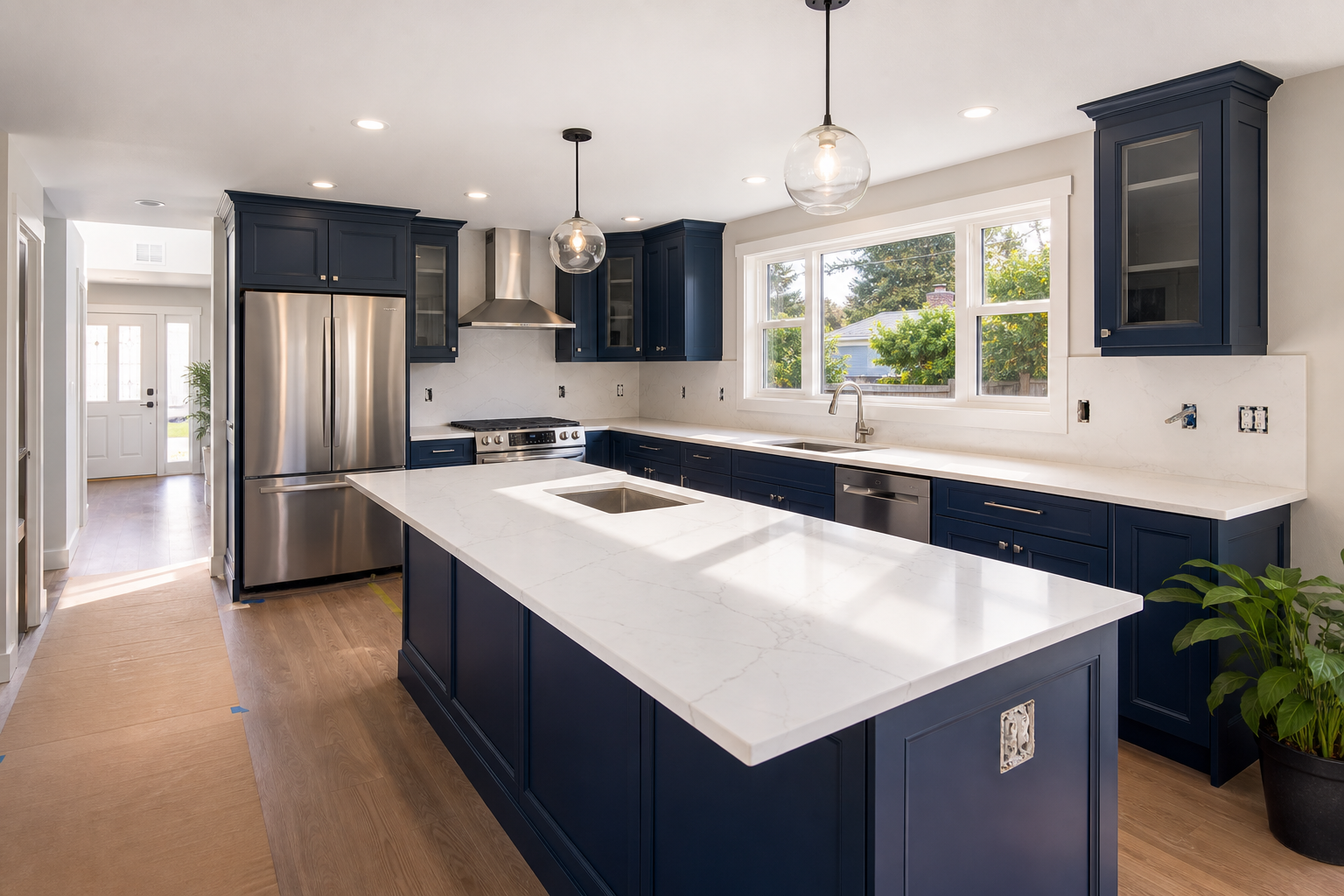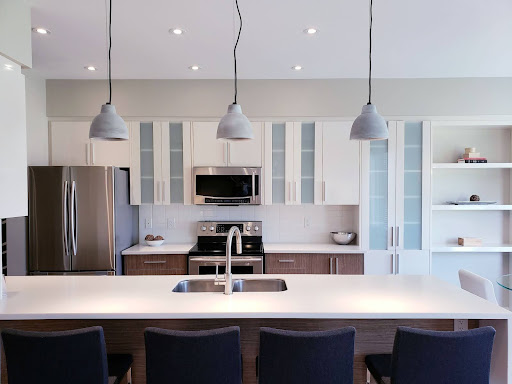


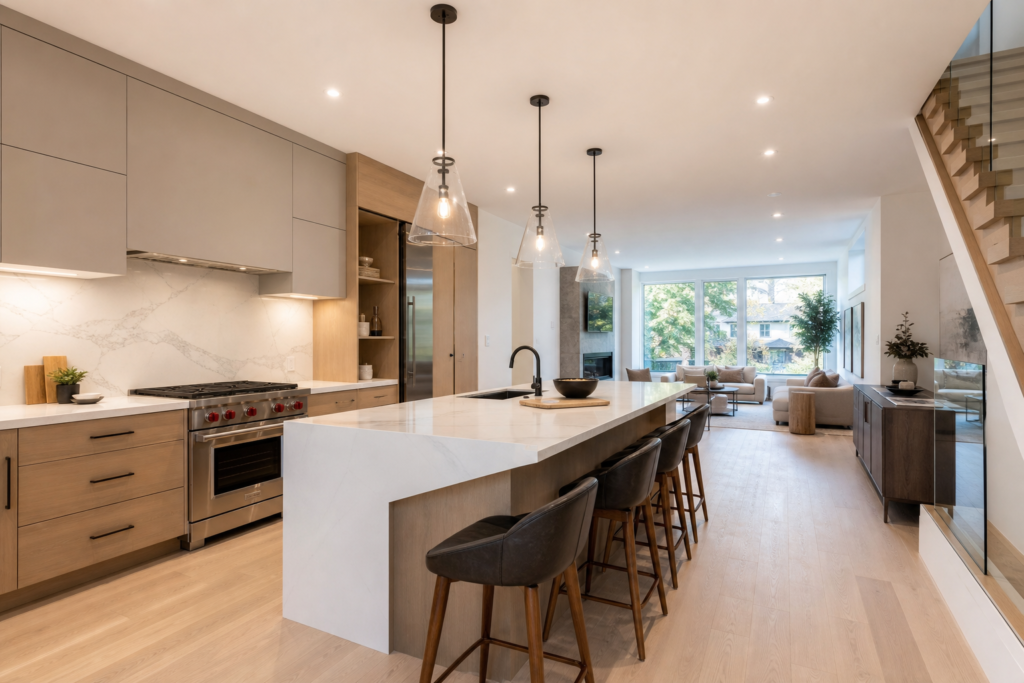
The open concept kitchen has been the most requested layout in home renovations for the past decade. But in 2026, more homeowners are asking whether it’s truly the right choice—or whether a closed or semi-open kitchen might better suit their lifestyle. If you’re planning an open concept kitchen renovation, understanding the full picture—including costs, structural requirements, and resale impact—will help you make the right decision for your home.
In this guide, we’ll compare the benefits and drawbacks of each layout, break down renovation costs, and help you decide which approach fits your family and your GTA home.
The Open Concept Trend: Is It Still Worth It in 2026?
Open concept kitchens remain popular, but the trend has evolved. The pandemic shifted how families use their homes, and many homeowners now value defined spaces for remote work, cooking, and quiet time. According to recent Canadian real estate data, open concept layouts still appeal to the majority of buyers, but there’s growing interest in “broken plan” designs that blend openness with strategic separation.
The takeaway? Open concept kitchens aren’t going away, but the all-or-nothing approach is being replaced by more thoughtful, flexible designs that balance connection with functionality.
Pros of Open Concept Kitchens
There are compelling reasons why open concept layouts dominate modern kitchen renovations:
- Better flow and sightlines: Removing walls between the kitchen, dining, and living areas creates a seamless space that feels larger and more connected.
- Natural light: Open layouts allow light to travel freely across the space, reducing the need for artificial lighting during the day.
- Social connectivity: Cook while chatting with guests, help kids with homework, or watch TV—all from the kitchen.
- Entertaining: An open kitchen makes hosting easier, as guests naturally gather around the island or breakfast bar.
- Resale appeal: Open concept layouts are still the most requested feature among homebuyers in the GTA market.
Cons of Open Concept Kitchens
Despite their popularity, open concept kitchens come with real drawbacks that are worth considering:
- Noise travels: Kitchen appliances, cooking sounds, and conversations carry throughout the entire living space.
- Cooking odours spread: Without walls to contain them, cooking smells permeate your living and dining areas.
- Always on display: There’s no hiding a messy kitchen when it’s visible from every angle. You’ll need to stay on top of tidying.
- Less wall space: Removing walls means losing storage opportunities and display space for art or shelving.
- Higher heating and cooling costs: Larger open spaces are harder to heat and cool efficiently.
Pros of Closed (Traditional) Kitchens
Closed kitchens are making a quiet comeback, especially among serious home cooks and those who work from home:
- Contained mess and odours: Keep cooking chaos behind closed doors.
- Better acoustics: Walls provide sound insulation between kitchen noise and living spaces.
- More storage: Four walls offer more cabinet, pantry, and shelving options.
- Dedicated workspace: A separate kitchen can feel more functional and efficient for meal prep.
- Design flexibility: You can choose bolder design elements without worrying about clashing with adjacent rooms.
Structural Considerations
Before committing to an open concept renovation, you need to understand the structural implications:
Load-Bearing Walls
Many homes in Burlington and the GTA have load-bearing walls between the kitchen and adjacent rooms. Removing one requires a structural engineer’s assessment and the installation of a support beam. This can add $3,000–$15,000 to your renovation, depending on the span and structural complexity.
Building Permits
Any structural wall removal in Ontario requires a building permit. Your contractor will need to submit engineering drawings to the City of Burlington or your local municipality. Permit fees typically range from $500–$2,000, and the approval process adds 2–6 weeks to your timeline.
Mechanical Systems
Walls often conceal plumbing, electrical wiring, HVAC ducts, and gas lines. Relocating these systems adds cost and complexity. A thorough inspection before demolition helps avoid surprises.
Cost Comparison
Here’s how the costs break down for each approach in the GTA market:
| Project Type | Estimated Cost (CAD) |
|---|---|
| Open concept conversion (non-load-bearing wall) | $8,000 – $20,000 |
| Open concept conversion (load-bearing wall removal) | $15,000 – $40,000 |
| Open concept with full kitchen renovation | $50,000 – $120,000+ |
| Closed kitchen renovation (existing layout) | $35,000 – $80,000 |
| Semi-open design (partial wall or pass-through) | $10,000 – $30,000 |
The semi-open approach—using a half wall, large pass-through, or glass partition—has become increasingly popular as a compromise that delivers many of the benefits of open concept without the full commitment.
Resale Value Impact
In the GTA real estate market, both open and closed kitchens can work in your favour—it depends on execution:
- Open concept kitchens tend to appeal to younger buyers and families. They photograph well in listings and create a sense of spaciousness that helps homes sell faster.
- Well-designed closed kitchens appeal to serious cooks and buyers who value defined spaces. A beautifully finished closed kitchen with quality materials won’t hurt resale.
- Poor execution hurts either way. A poorly done wall removal with visible beams and awkward transitions will lower your home’s value. Quality workmanship matters more than layout.
Working with experienced renovation professionals ensures that whichever layout you choose adds maximum value to your home.
Frequently Asked Questions
How much does it cost to remove a wall for an open concept kitchen?
Removing a non-load-bearing wall typically costs $3,000–$8,000 including drywall, flooring, and ceiling repairs. Load-bearing wall removal with a steel beam ranges from $8,000–$20,000, including engineering and permits.
Is open concept still popular in 2026?
Yes, open concept remains the most requested layout in the GTA housing market. However, “broken plan” designs with semi-open layouts are gaining traction as homeowners seek a balance between openness and defined spaces.
Can I convert an open concept kitchen back to closed?
Yes, adding walls back is generally simpler and less expensive than removing them. A standard wall addition with finishing typically costs $3,000–$8,000.
Do I need a permit to remove a kitchen wall in Ontario?
You need a permit for any structural wall removal. Non-structural wall removal may not require a permit, but it’s always best to check with your municipality and have a professional assess the wall first.
What’s a good compromise between open and closed?
Consider a semi-open design with a half wall, kitchen island divider, or glass partition. This provides sightlines and connection while containing some noise and cooking odours. It’s also significantly less expensive than a full structural renovation.
Make the Right Choice for Your Home
Whether you choose open concept, closed, or a creative hybrid, the best kitchen layout is one that fits your lifestyle, your home’s structure, and your budget. The key is working with a renovation partner who understands the structural, design, and permit requirements to execute your vision flawlessly.
Considering an open concept kitchen renovation? Contact Domilya Group for expert guidance and a free consultation tailored to your Burlington or GTA home.